Monday, 28 July 2008

Ab Fab


I seem to be getting a few moments here and there to read more recently. At the moment I;m engrossed in The Beautiful Fall. A thoroughly researched and an almost overwhelming array of characters contribute to this exhaustive account of the rise of Yves St Laurent and Karl Lagerfeld. Both men saw success in 1954 with their entries in the International Wool Secretariat Competition, but their rise to success took divergent paths. St Laurent saw in the revolution of the couture business whilst Lagerfield was always visionary in anticipating the rise of ready to wear and the cult of youth. The influence of the May 68 riots, youth culture and changes in society shaped the development of Paris Couture in the latter half of the Twentieth Century more so than any other time in its history.

Monday, 21 July 2008

Jumpman


I left my old job (after 10 years) at the start of this year to run my own business. I was chuffed to receive a Wii as a leaving gift, but with the pressure of the new business, it hadn’t had much of a work out until the last month or so. So after many hours and much swearing I finally finished Super Mario Galaxy. This is without doubt the most inventive of the Mario outings, making both great use of the Wii controller and mind bending use of in game physics. But is it the best Mario game? I think that crown must remain with Super Mario 64. The most important in its significance remains Super Mario Bros as it defined 2D platform gaming. It still is the gold standard.

My fop 5 favourite Mario games, in no particular order...

*Donkey Kong (Game and Watch)
*Super Mario Bros. (NES)
*Mario Kart 65 (N64)
*Super Mario 64 (N64)
*Super Mario Galaxy (Wii)

Monday, 14 July 2008

Round the Outside!


I love this record cover. Not only does it represent the pairing of two of the most important people to shape street wear (if not the most important influentially), but it later became both the source material directly for a classic Supreme T and also Supreme’s use of the “World Famous Supreme Team” slogan. Released in 1990 on Virgin Records.

Saturday, 5 July 2008

Wanderlust


These postcards were amongst some other gems in a book store at Glastonbury. This style of photography that celebrates the banal and kitsch of Americana and Route 66 has become a cliché and a bit played out, but the images still have a certain charm. I love Stephen Shore's works that depict diners and big American cars, and whilst far brighter and chirpier there are several along these lines amongst this pack of cards,

Saturday, 28 June 2008

Film Soleil


Amongst the usual SAS books and boxer biographies a small selection of Pocket Essentials caught my eye. A long time fan of the series I was chuffed to find a title I hadn’t picked up before. Film Soleil is a concise exploration of what the author proposes to be a film genre that has evolved in the mid 70s, Chinatown perhaps being the turning point. The book explores a host of neo noir films that draw upon the conventions of noir, but “turn the lights on”. Dry arid highways, cowboy boots and fast cars form part of the visual imagery. Directors include Dahl and the Coehns, films include Sexy Beast and Point Blank.

Wednesday, 25 June 2008

Pilton


It was nice to see all the crowds starting to gather for the Glastonbury Festival today. The infrastructure for the event goes in place several months in advance of the event, with the perimeter fence having sprung up about two months ago. I have spoken to chippies and other workers who have been preparing the site for some time now. Its strange to see quiet Pilton become a city of thousands almost over night. Of course getting to work is a bit tougher because of all the crowds, but it is such a smooth operation the impact is pretty minimal. Whilst I’m not attending the full event, I will be going Sunday, so here’s hoping its not as ridiculously muddy as last year.

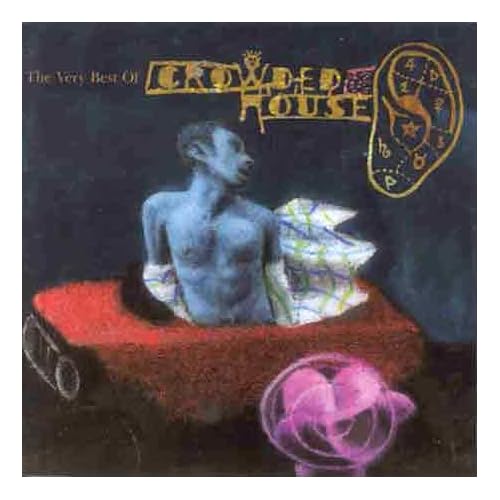
When I checked the line up I was a bit disappointed that two of my favourite groups, Massive Attack and Crowded House, were playing Saturday. So I checked Crowded House’s website when the program came out and was thrilled to see they were also playing in Westonbirt Arboretum (a fantastic location for a nice bourgeoisie night out). So I made the trip up there last Saturday and enjoyed a ripper performance. When they had their farewell concert in 96 I thought that was that and I would never see them play, especially with the untimely death of Hessie (who still makes me laugh when I see him on The Wiggles).

They played a good selection of favourites and new tracks. Neil’s banter is playful and confident and he works the crowd well. The reinterpretation of the songs and audience involvement makes the night more intimate and special for the audience. I can only imagine how many times they have had to play most of their songs, but you really felt that on the night this was the first time they had played it to anyone and they gave it their all. In the words of Moly Meldrum, do yourself a favour, see them before they really retire for good.

Tuesday, 17 June 2008

Jack Klompus's Battery Shop


I am ashamed to say that my knowledge of aerospace is limited to the realms of fiction, but I was particularly intrigued to read about NASA's Ulysses craft. Whilst its mission was interesting (to study the sun) its the length of service and the reason its mission has ended captured my interest. NASA has now ended the vehicles mission after seventeen years as its power system has now run out. Considering my phone runs flat in two days and my Frog runs for little more than 10 minutes, what the hell was powering this thing?

Like something out of Dr Brown's car, the energy for the Ulysses came from a radioisotope thermoelectric generator. This cell generates power using thermocouples heated by radioactive fuel. The radioisotope decays and gives off heat, which the thermocouple converts to electricity. The isotopes used allow for an extended cell life, hence the Ulysses lasting 17 years.

Where things get a bit scary is that isotope thermoelectric generators aren't confined to what we send out into space (or what falls back to Earth). The Soviets were big fans of them for beacons and lighthouses, and concerns remain as many have been just left, their status unknown.